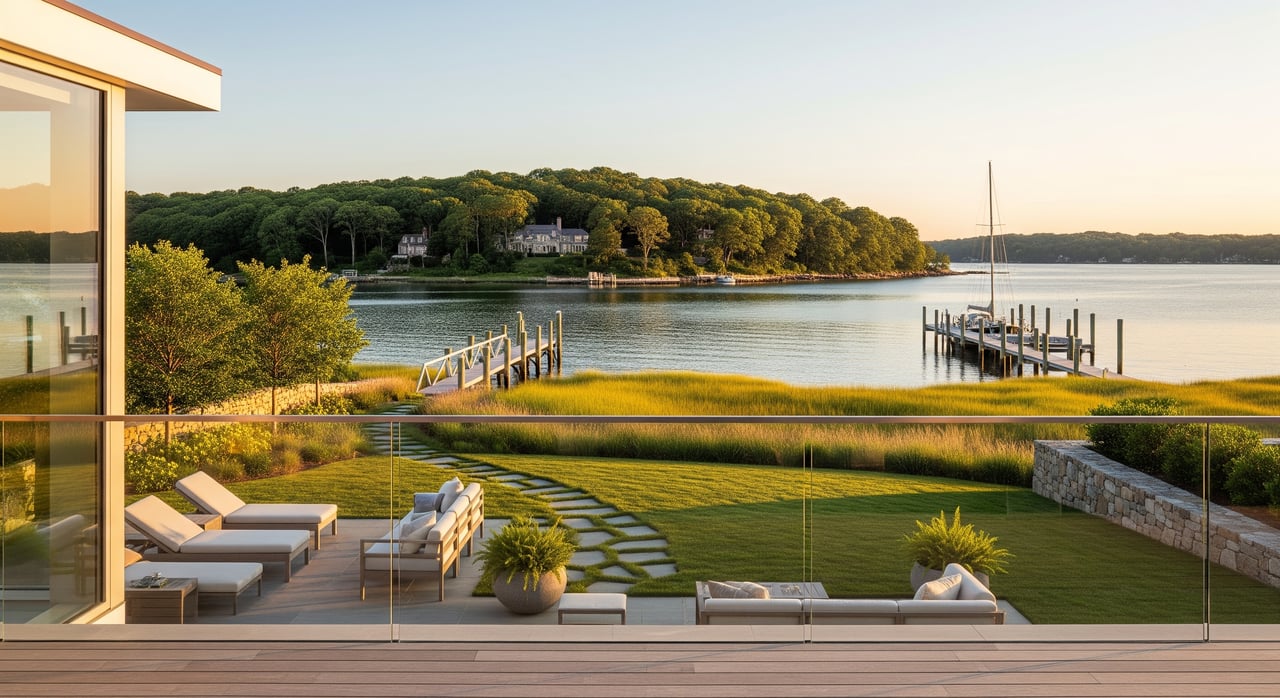
Do you picture sunrise over Long Island Sound or a winding drive through mature trees when you think of life in Greenwich? The choice between waterfront, in-town, and backcountry is more than a preference. It shapes your daily routine, maintenance needs, risk profile, and long-term value. In this guide, you’ll compare lifestyle trade-offs, architecture, and ownership considerations so you can match the right Greenwich submarket to your goals. Let’s dive in.
How Greenwich breaks down
Greenwich is best understood in three broad bands from south to north. Aligning your search with these segments helps you compare apples to apples.
Waterfront
Waterfront covers properties with direct frontage on Long Island Sound, Greenwich Harbor, coves, and private inlets. Key features to confirm include water frontage length, tidal versus non-tidal areas, dock or boathouse rights, riparian rights, and shoreline improvements like bulkheads or seawalls. Some homes sit on small peninsulas, while others cluster around protected coves.
In-town
In-town includes neighborhoods in and around Greenwich Avenue and the train station, with a mix of single-family homes, townhomes, and condos. Lots are smaller than backcountry, walkability is higher, and you have fast access to shops, dining, cultural venues, and Metro-North. Some pockets are fully walkable, while others are near-walkable with short drives to amenities.
Backcountry
Backcountry spans inland and northern Greenwich. Expect larger parcels, wooded settings, and a quiet, rural feel. Homes often sit on acreage with winding roads, greater privacy, and a focus on private outdoor amenities. Some parcels fall under conservation or open-space overlays, and many rely on septic systems rather than municipal sewer.
Lifestyle trade-offs that shape value
Your daily routine and priorities will influence where value shows up for you.
Commute and transit
- Waterfront and in-town locations typically offer the shortest trips to the Greenwich train station and quicker access to I‑95 and the Merritt Parkway.
- Backcountry buyers usually accept longer drives in exchange for privacy and space.
Access to amenities
- Waterfront living centers on coastal amenities, from boating and private docks to beaches and waterfront parks.
- In-town offers the highest walkability to retail, dining, cultural venues, and commuter rail.
- Backcountry emphasizes private amenities like gardens, trails, pools, and room for accessory structures.
Privacy and community feel
- Waterfront life often revolves around boating, outdoor entertaining, and social events tied to harbors or clubs.
- In-town provides an urban-suburban mix with community activity on and around Greenwich Avenue.
- Backcountry delivers seclusion, nature, and generous outdoor space for flexible use.
Maintenance and ownership
- Waterfront ownership can involve higher ongoing maintenance, including shoreline structures, marine exposure, and seasonal prep.
- In-town lots are easier to maintain; attached properties may have HOA or condo management responsibilities.
- Backcountry ownership often includes driveway and yard care for acreage, septic system upkeep, and long-term landscaping or forestry work.
Architecture and lots: what you see and what it means
Style and site features are more than aesthetics. They influence cost, comfort, and resale.
Waterfront
You’ll see shingle-style coastal homes, renovated historic cottages, and modern coastal designs oriented to views and sunlight. Many properties feature marine-grade materials, elevated foundations in flood-prone areas, and shoreline protections like bulkheads or riprap. Docks, boat lifts, and boathouses are common, and the orientation of rooms often follows view corridors.
In-town
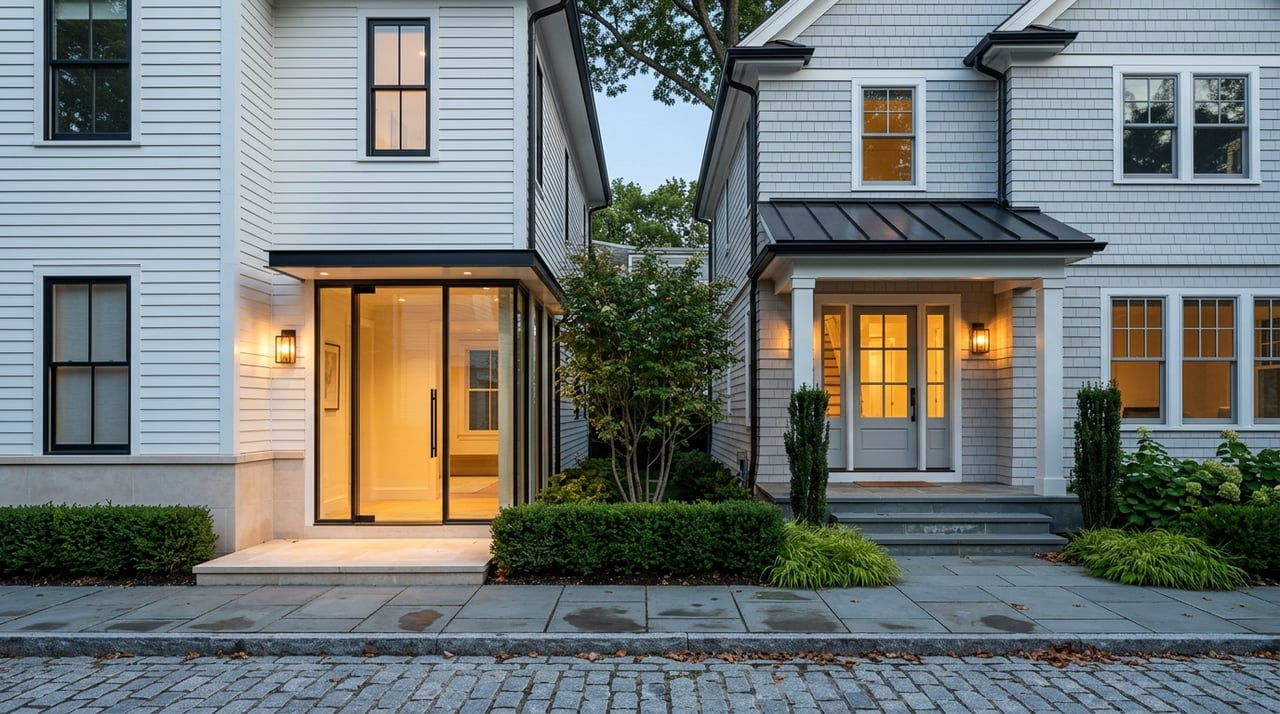
Expect Colonial, Tudor, and Victorian homes alongside townhomes and luxury condos. Many properties are on municipal water and sewer with smaller yards. Historic homes may require updates to HVAC, electrical systems, and insulation, which can be a strategic renovation opportunity if done thoughtfully.
Backcountry
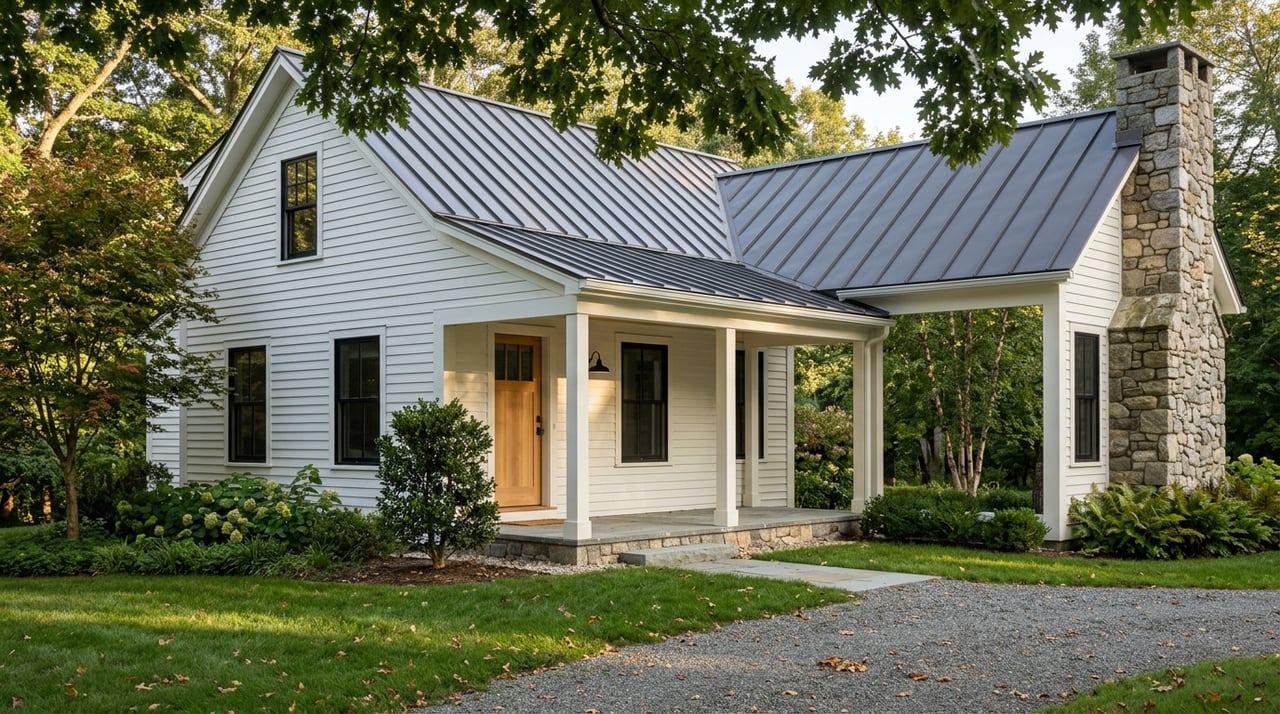
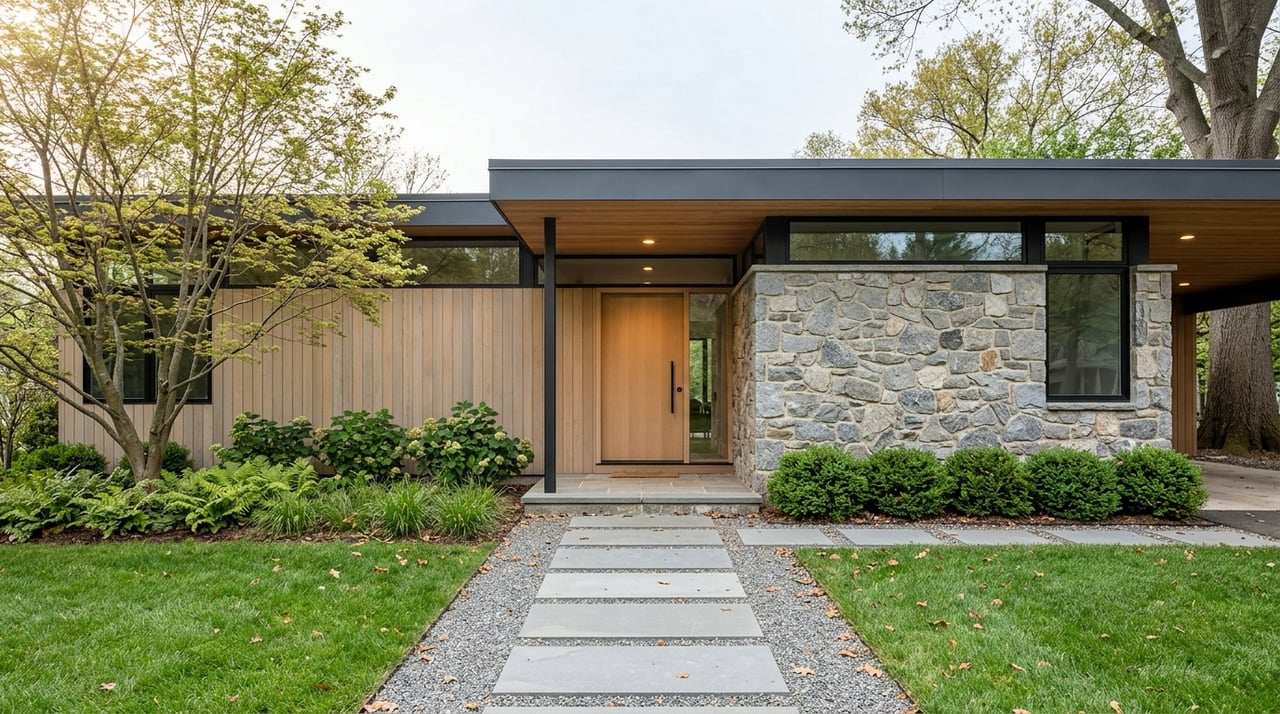
Homes range from larger-scale Colonials and contemporary farmhouses to midcentury designs on acreage. Lots commonly include mature trees, long approaches, and opportunities for accessory buildings like barns or guesthouses. Private wells and septic systems are common, and driveway length, topography, and utility extensions can affect both cost and value.
Total cost of ownership and risk
Price is only part of the equation. Understanding risk, insurance, and regulation helps you compare true costs across submarkets.
Flood and coastal exposure
Waterfront properties may sit in FEMA-mapped flood zones. Lenders typically require flood insurance when applicable, and premiums vary based on elevation and mitigation features. Ask for an Elevation Certificate, shoreline permits, and details on any resilience measures such as elevated mechanicals or flood vents. Consider long-term sea-level and storm-surge exposure when evaluating both purchase and resale.
Insurance and financing
Coastal exposure can increase homeowner insurance costs and wind or hurricane deductibles. Many luxury purchases involve jumbo financing, which has specific underwriting standards. Inland properties generally don’t face flood requirements but still benefit from thorough review of prior claims and system updates.
Zoning, permitting, and conservation
Waterfront renovations may be guided by coastal management rules, setbacks, and wetland protections. Backcountry parcels may be influenced by conservation easements or woodlands and slope regulations that define buildable area. Before you plan an addition, check local approvals and recent permits and confirm whether a property is in a historic district or subject to commission oversight.
Utilities and access
Being on municipal sewer is a selling point in parts of Greenwich. Septic systems require routine maintenance and can affect future expansion plans. Road maintenance and winter access matter more in backcountry, especially on long or private drives.
Which submarket fits your lifestyle
Use your non-negotiables to narrow the field, then weigh trade-offs.
- Choose waterfront if you prioritize direct water access, views, and a coastal routine. Expect higher upkeep and a detailed insurance and permitting review.
- Choose in-town if walkability, rail access, and convenience shape your day. Expect smaller lots and a wider mix of housing types.
- Choose backcountry if privacy, acreage, and flexible outdoor use lead your list. Budget for septic, driveway, and landscape care.
How lifestyle affects long-term value
Value in Greenwich is driven by scarcity, access, and carrying costs. Waterfront is limited by shoreline geometry and regulation, which supports a premium. In-town benefits from sustained demand for proximity to services and transit. Backcountry’s large-lot scarcity attracts buyers who prize privacy. At the same time, carrying costs and liquidity differ. Waterfront can carry higher insurance and maintenance, while in-town often benefits from broader buyer pools and potentially faster resale. Backcountry can be highly desirable yet more sensitive to macro conditions when buyer preferences shift.
When you compare options, ask your agent to pull a matched set of metrics by submarket:
- Median sale price and price per square foot over 1, 3, and 5 years
- Inventory and months of supply
- Average days on market
- Flood-zone counts and percentage of sales in mapped zones
- New construction versus resales ratio
- Typical annual property tax ranges for representative property types
- Average lot sizes and the share of parcels 2 acres and above
- Percentage of waterfront properties with docks or boathouses
Reading these numbers together helps you see both appreciation potential and ease of resale.
Seller strategies by submarket
Your listing plan should match your property’s lifestyle strengths and address likely buyer questions.
Waterfront sellers
- Document shoreline work, permits, and any elevation or resilience improvements.
- Provide an Elevation Certificate if available and be prepared with sample insurance information.
- Showcase sunrise, sunset, and view corridors with professional photography and film. Feature dock functionality and outdoor living areas.
In-town sellers
Emphasize walkability, rail access, and proximity to amenities.
Address system updates and energy efficiency clearly, especially in historic homes.
Use lifestyle staging that highlights everyday convenience and flexible spaces for work or fitness.
Backcountry sellers
- Map the property’s approach, acreage, and outdoor program. If applicable, outline potential accessory use areas.
- Provide septic service history and any well testing on file.
- Schedule showings to capture natural light and seasonal landscape appeal; drone and drive-approach visuals help buyers feel the setting.
How RE/MAX Heritage helps you decide
You deserve more than generic advice. You need guidance rooted in local knowledge, precise data, and premium presentation. RE/MAX Heritage blends long-tenured Greenwich expertise with cinematic marketing and global distribution to position your property for the right buyer pool. For buyers, we build side-by-side comparisons that reflect your commute, risk tolerance, and total cost of ownership. For sellers, we align staging, photography, and film to the lifestyle story your property tells, then coordinate with trusted mortgage and insurance partners to reduce friction from contract to close.
Ready to compare your specific options in Greenwich’s waterfront, in-town, and backcountry markets? Reach out to RE/MAX Heritage for a custom analysis.
FAQs
What defines Greenwich waterfront vs backcountry?
- Waterfront includes parcels with direct frontage on Long Island Sound, harbors, coves, or inlets, while backcountry spans inland and northern areas with larger lots and a wooded, rural character.
How does flood risk affect a Greenwich waterfront purchase?
- If a property sits in a mapped flood zone, lenders often require flood insurance, and premiums depend on elevation and mitigation features, which should be reviewed during due diligence.
Are in-town Greenwich homes easier to resell?
- In-town locations often benefit from strong demand for walkability and transit access, but actual liquidity depends on current inventory, pricing, and recent days-on-market data.
What are typical maintenance differences by submarket?
- Waterfront usually carries higher upkeep for shoreline structures and salt exposure, in-town tends to have simpler lot care, and backcountry often involves septic maintenance and larger-scale landscaping.
How should I compare value across the three areas?
- Look beyond price to total cost of ownership and liquidity by reviewing price trends, days on market, carrying costs, and regulatory or insurance factors for matched property types.
What permits or records should I request before buying?
- Ask for shoreline permits and Elevation Certificates for waterfront, septic and well records for backcountry, and recent building permits, utility info, and any applicable historic or conservation documents for all submarkets.